
ABOUT
ICELAND
THE LAND OF FIRE & ICE
Iceland is a volcanic island, born from the fiery depths of the Earth’s crust. Its terrain features an incredible variety—towering glaciers like Vatnajökull, the largest on the European continental plate, stretch across the south and east, shimmering in the winter sun. Volcanoes, both active and dormant, punctuate the landscape, with eruptions shaping the terrain over millennia. Massive waterfalls, such as Gullfoss and Skógafoss, cascade down cliffs, creating thunderous roars that echo through valleys. Geothermal springs, bubbling mud pots, and steaming vents remind visitors of the Earth’s fiery heart beneath the surface.
Iceland is estimated to be about 20 to 25 million years old, which is quite recent compared to many other continents and land formations that can be hundreds of millions or even billions of years old. Iceland is a volcanic island formed primarily due to caused from underwater volcanic eruptions and the activity of the Mid-Atlantic Ridge, a tectonic plate boundary where the North American and Eurasian plates are slowly drifting apart. As these plates diverge, magma rises from the Earth’s mantle, creating new crust and building up the landmass. This process continues today, making Iceland one of the most geologically active places on Earth.
During the last Ice Age, which peaked around 20,000 years ago, glaciers like Vatnajökull expanded over large parts of Iceland, covering roughly 11% of the land. These glaciers played a crucial role in shaping the terrain. Moving ice gouged out deep valleys, fjords, and basins, creating the rugged and dramatic coastline seen today. As glaciers melted, they left behind vast deposits of sediment, gravel, and sand, forming plains, outwash terraces, and the fertile lowlands around volcanic mountains. The immense weight of ice sheets depressed the crust, and as the ice melted, the land gradually rebounded, influencing local topography.
Despite its proximity to the Arctic, Iceland enjoys a relatively mild climate thanks to the Gulf Stream. Summers are cool, with long, bright days, especially around the midnight sun, when daylight extends nearly 24 hours. Winters are cold but often illuminated by the Northern Lights—a breathtaking natural display of shimmering green and violet across the night sky. The island’s environment is fragile, with a delicate balance between human activity and nature conservation.
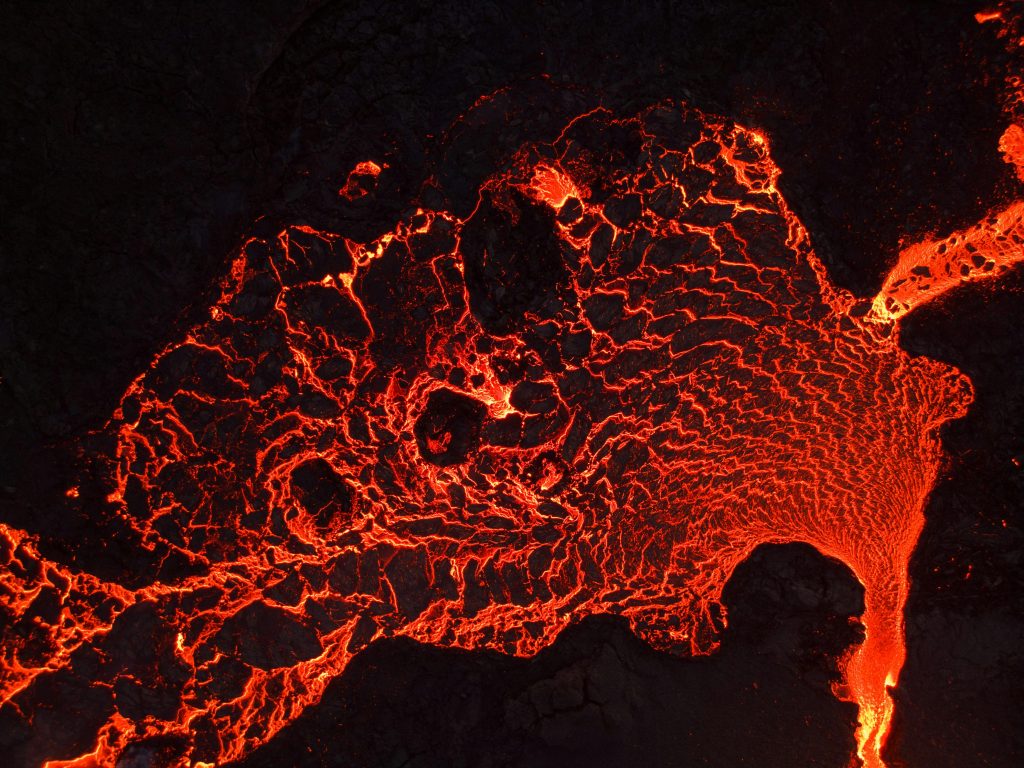
Image of an Icelandic Lava Crater – Courtesy of Tomáš Malík
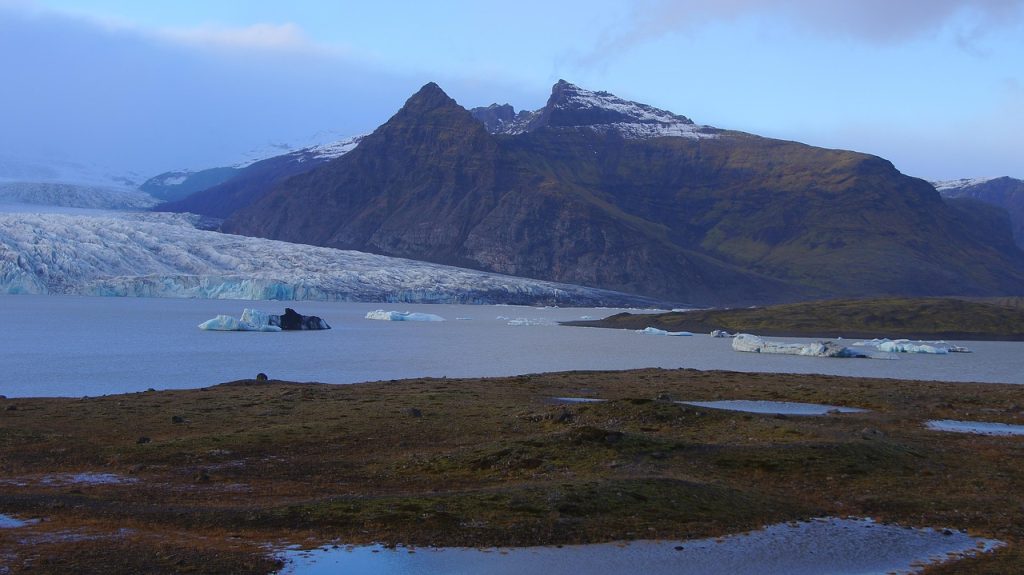
Image of Vatnajökull – Courtesy of Ari Kejonen
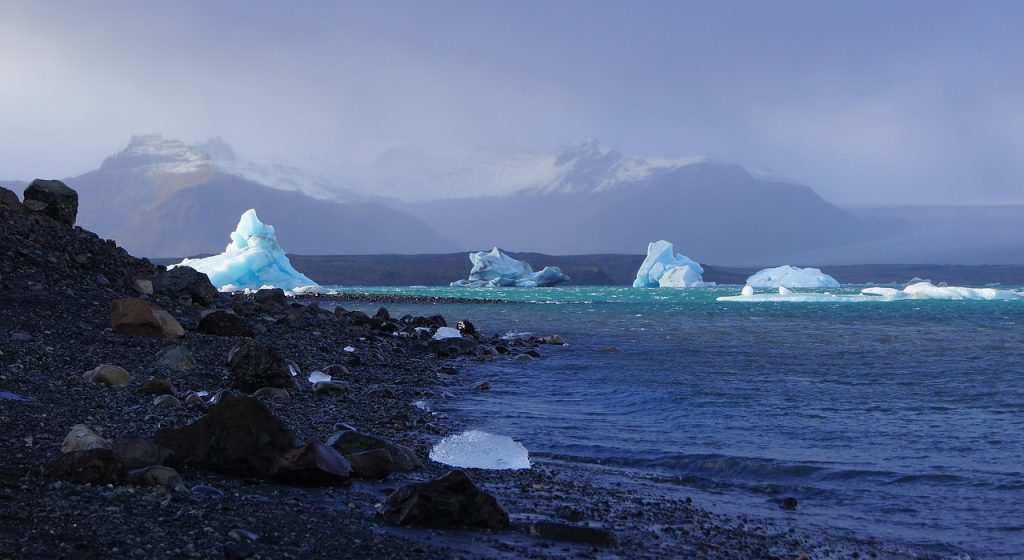
Image of Fjallsarlon – Courtesy of Ari Kejonen
Throughout the Quaternary period (the last 2.6 million years), glacial cycles have dramatically sculpted the landscape, carving deep valleys, fjords, and shaping the rugged coastlines. During the Ice Ages, glaciers expanded over much of Iceland, eroding rocks and creating the deep fjords and valleys evident today. The moving ice gouged out deep valleys, fjords, and basins, creating the rugged and dramatic coastline can also be seen today. As glaciers melted, they left behind vast deposits of sediment, gravel, and sand, forming plains, outwash terraces, and the fertile lowlands around volcanic mountains. The immense weight of ice sheets depressed the crust, and as the ice melted, the land gradually rebounded, influencing local topography.
Iceland’s landscape is a living testament to Earth’s volcanic and glacial history. From its birth as a volcanic island rising from the ocean depths to its sculpting by ice sheets during the Ice Age, every feature tells a story of fiery eruptions, icy glaciers, and relentless natural forces. Its dramatic terrain continues to evolve, offering an unparalleled glimpse into the dynamic processes that shape our planet.
THE VIKING AGE & THE FIRST INHABITANTS OF ICELAND
The origins of Iceland’s earliest inhabitants are shrouded in a mix of legend and limited archaeological evidence. Traditionally, Norse settlers, primarily from Norway, are believed to have arrived around 870 AD, during the onset of the Viking Age. These early Norse explorers, driven by the pursuit of new land and resources, established the first permanent settlements. Excavations, especially in the west and south, support this, revealing remnants of their farms, tools, and artifacts.
However, intriguing archaeological finds in Iceland’s eastern regions suggest that people may have been present even before the Vikings officially arrived. These findings, which include artifacts and possible habitation sites, hint at earlier, Norse presence. Yet, concrete evidence remains elusive, and a lot of research is still needed to come to more conclusive answers.
Adding another layer of complexity, Norse sagas—epic tales passed down through generations—mention Celtic peoples, often called “Picts” or “Pictish tribes,” already living in Iceland prior to Viking settlement. These stories, rich in myth and history, suggest that Celtic explorers or settlers might have been among the first to set foot on the island. Nevertheless, modern archaeology has yet to confirm this, and most experts consider the sagas more literary than factual.
The story of the Icelandic Vikings is a saga woven with bravery, exploration, resilience, and cultural richness. These Norse seafarers, often romanticized as fierce warriors, were also shrewd explorers, settlers, and storytellers whose influence echoes through history to this day. Their legacy is rooted in a period of remarkable adventure and transformation that shaped not only Iceland but the entire Scandinavian and North Atlantic regions.
The Vikings originated from the Scandinavian Peninsula—modern-day Norway, Sweden, and Denmark—around the late 8th century. They were part of a broader Norse culture that thrived on seafaring, trading, raiding, and establishing settlements across Europe and beyond. The most famous Viking raid, the attack on Lindisfarne in 793 AD, marked the beginning of the Viking Age, a period characterized by extensive exploration and expansion.
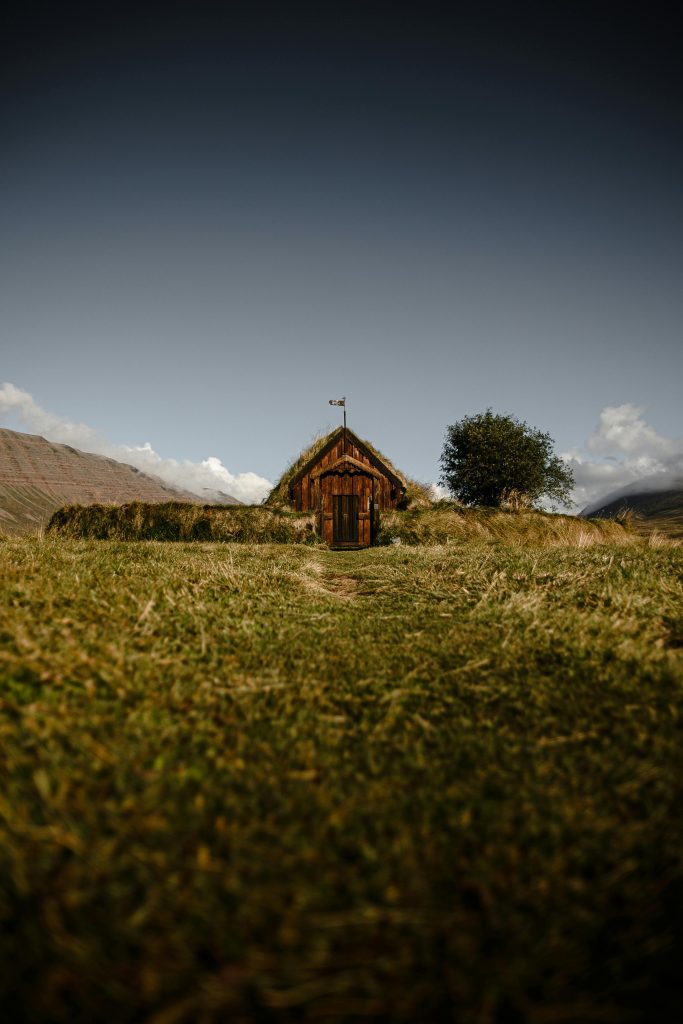
Image of a Brown Wooden Barn – Courtesy of Matthew DeVries
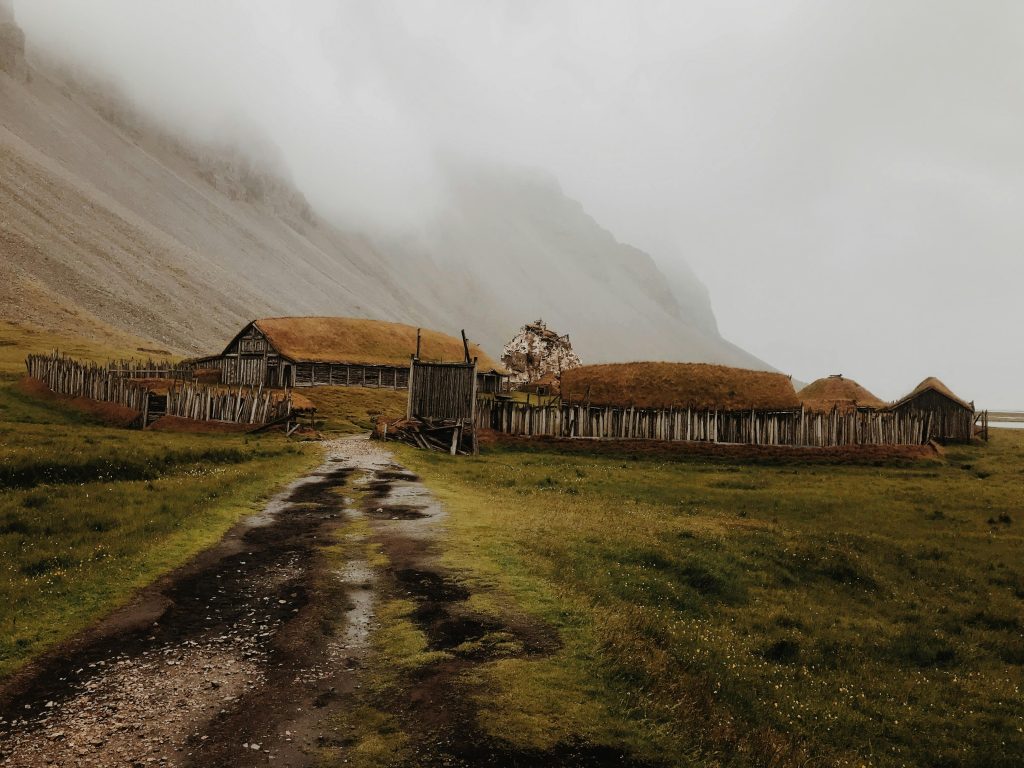
Image of the reconstructed Icelandic Viking Village – Courtesy of Mark Neal
The arrival of Vikings in Iceland is believed to have occurred around the late 9th century, with the first settlements dating to approximately 870 AD. Unlike their conquests on the continent, the Vikings who settled Iceland were primarily explorers and colonists seeking new land and opportunities. Led by chieftains and driven by a desire for land and independence, these Norse settlers established a society built on farming, fishing, and trading. According to the Landnámabók (the Book of Settlements), the settlement began with figures like Ingólfur Arnarson, who is traditionally considered Iceland’s first permanent settler. Over the next century, the island’s rugged terrain was transformed by Norse farmers, craftsmen, and traders, who carved farms into fjords and valleys, creating a resilient and self-sufficient society.
The Vikings brought with them to Iceland a rich cultural heritage rooted in Norse mythology, runes, poetry, and law. Their society was organized around chieftains and communities governed by a code of laws, which were later codified in the Grágás, Iceland’s medieval law code. They practiced a polytheistic religion centered on gods like Odin, Thor, and Freyja, and their beliefs permeated daily life, rituals, and storytelling. Their sagas—epic tales about gods, heroes, and legendary figures—are some of the most enduring literary works from medieval Scandinavia. These stories, passed down orally and eventually written down in the 13th century, recount adventures, battles, betrayals, and quests, providing insight into their worldview and values.
Beyond raiding, Vikings were exceptional explorers and traders. They traveled extensively across the North Atlantic, discovering and settling in places like Greenland and North America (Vinland). Their ships, long and sturdy, allowed for remarkable voyages across treacherous waters, connecting distant lands and cultures.
In Iceland, Vikings established a thriving trading culture, exchanging goods such as furs, walrus ivory, and amber. Their craftsmanship—particularly in metalwork, woodwork, and textiles—was highly advanced, and their ships were engineering marvels of the age.
In Iceland, the Viking heritage remains a central part of national identity. The old sagas are celebrated as literary treasures, and their spirit of independence and exploration persists. Today, Icelanders honor their Viking roots through festivals, museums, and reenactments—keeping alive the memory of these legendary explorers and warriors.
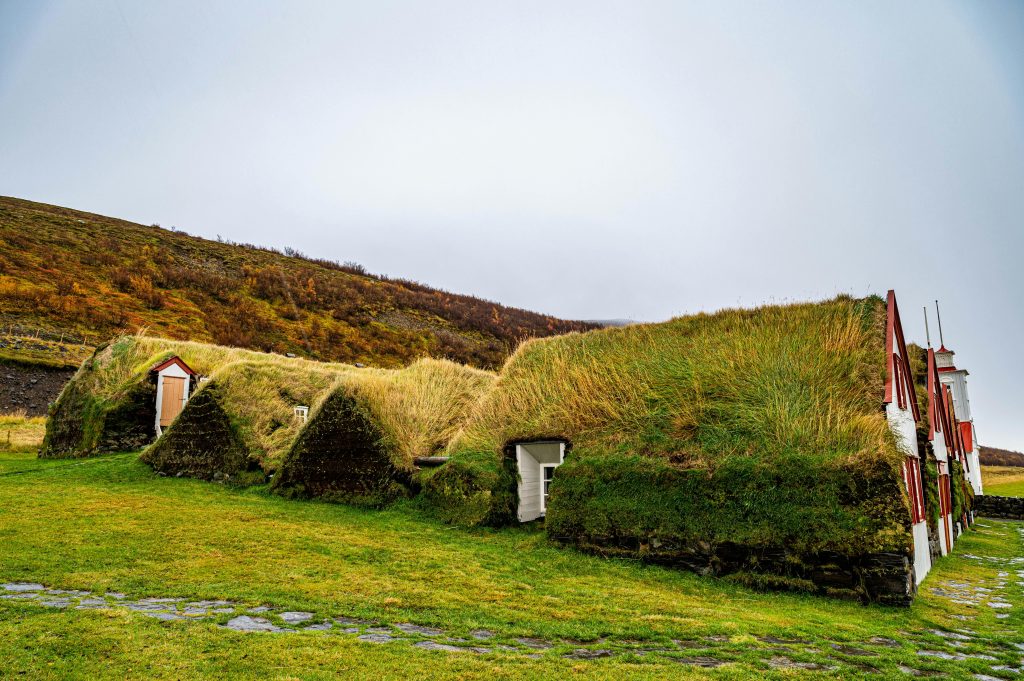
Image of Icelandic turf houses – Courtesy of David Stanfield
THE DARK AGES
After the Viking Age, Iceland entered a period often called the Dark Ages, roughly spanning the late 13th to early 15th centuries. During this time, Iceland’s societal structure shifted from a free, republican commonwealth to a more centralized, monarchical system. Initially, Iceland operated as a unique commonwealth, established in 930 AD with the Althing, one of the world’s oldest parliamentary institutions. This system allowed chieftains and free farmers to govern themselves, resolve disputes, and make laws collectively. However, by the late 12th and early 13th centuries, internal conflicts and rivalries intensified, especially among powerful families. The most notable among these families were the Sturlungar, a prominent clan whose influence grew significantly. This era was marked by intense internal feuds, cultural flourishing through manuscript production, and political upheaval.
The Sturlungar family, led by figures like Sturla Sighvatsson and Snorri Sturluson, became central players in Icelandic politics. Snorri Sturluson (1179–1241) was a towering figure of this period—poet, historian, and politician. He authored the Prose Edda, a foundational text on Norse mythology, and the Heimskringla, a comprehensive history of Norwegian kings. His writings preserved much of Norse mythology and history, making him vital for understanding Viking heritage. Politically, he was deeply involved in the turbulent power struggles of the time, aligning with various factions to protect his interests. In 1241, Snorri’s political enemies, fearing his influence, orchestrated his assassination at his home in Reykholt. His death marked a turning point, symbolizing the decline of the Icelandic Commonwealth’s independence and the rise of external control.
Following the chaos of feuds and internal strife, Iceland officially lost its independence in 1262–1264, when it entered into the Old Covenant (Gamli sáttmáli) with Norway. This agreement effectively made Iceland a Norwegian crown dependency, ending the republican tradition. From then on, the Norwegian crown exerted control over Iceland, which persisted until the 19th century, with sporadic efforts at independence and cultural revival. Despite political upheavals, this period was rich in manuscript production, preserving sagas, poetry, and legal texts. Icelandic sagas, written during and after this era, record heroic deeds, family histories, and mythological tales, cementing Iceland’s literary legacy. These texts continue to influence modern Icelandic culture and identity.
The Codex Regius (or GKS 2365 4to) is arguably the most famous of these manuscripts. Likely composed in the 13th century, it contains a vast collection of Old Norse poetry and mythological texts, written in a beautiful, careful script. Its significance is profound because it preserves the Poetic Edda, a collection of anonymous Old Norse poems that recount gods, heroes, and the cosmos itself.
The Poetic Edda includes stories of Odin, Thor, Loki, and other gods, as well as heroic legends of figures like Sigurd the Dragon Slayer. It offers a poetic, often cryptic glimpse into the Norse worldview, showcasing themes of fate, heroism, and the divine. These poems are foundational for understanding Norse mythology, and, by extension, the broader Germanic mythological tradition. Beyond mere mythology, the Codex Regius provides invaluable insights into the religious beliefs, cosmology, and moral values of the Norse and broader Germanic peoples. For example, it details the Norse concept of wyrd (fate), the nature of the gods, and the eschatological vision of Ragnarök—the end of days.
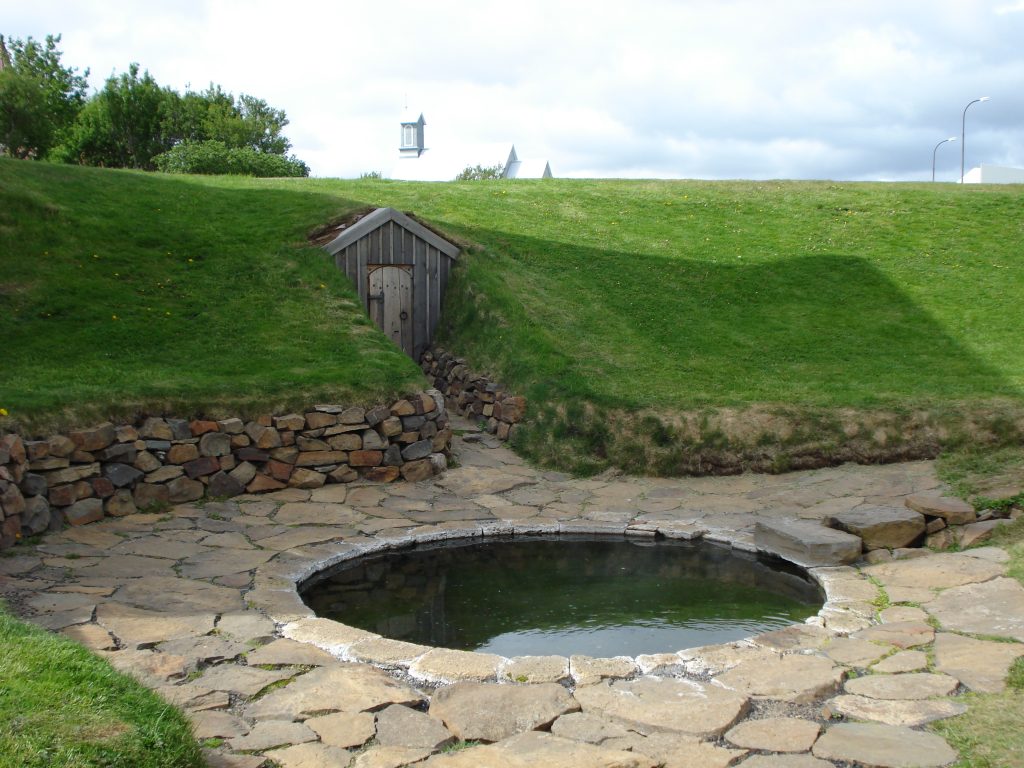
Image of Snorralaug, “Snorri’s Bad” in Reykholt – Courtesy of TommyBee

Image of the first page of the Codex Regius of the Poetic Edda, also known as Vǫluspá
There are also many manuscripts from this period that shed light on the development of Christianity in Iceland. The Hauksbók (Haukr Erlendsson’s Book), compiled in the early 14th century. This manuscript is a treasure trove of sagas, legal texts, and religious writings. Its compilation reflects a conscious effort to preserve both secular and sacred knowledge, blending mythic traditions with Christian teachings, which illustrates the transitional nature of Icelandic society at the time. Additionally, the Flateyjarbók (The Flatøy Book), completed in the late 14th century, is an expansive manuscript that encompasses a wide range of sagas, chronicles, and legendary tales. Notably, it includes the Saga of Olaf Tryggvason, which underscores the Christianization of Scandinavia, illustrating how religious transformation was documented and mythologized simultaneously.
During this period, church power expanded considerably. The Icelandic church gained influence, often aligning with Norwegian authorities. The establishment of more monasteries and religious institutions led to shifts in religious practices, with Christianization becoming more entrenched. This influence is reflected in the proliferation of religious manuscripts, but also in conflicts over ecclesiastical authority.
The 14th century brought about climatic challenges, notably the Little Ice Age, which reduced farm productivity, triggered food shortages, and increased hardship. These environmental stresses, coupled with the fallout from the Black Death (which reached Iceland around 1402), decimated the population and strained society.
The Black Death had a profound impact, causing a drastic decline in population and leaving many farms abandoned. This pandemic, along with ongoing conflicts and economic struggles, led to social upheaval. Many chieftains and farmers faced hardship, and some communities fell into disarray, marking the beginning of a period of societal decline.
EARLY MODERN ERA
Around the 16th century, Iceland began becoming incorporated into the Danish realm, following the end of Norwegian rule. This shift was solidified when the Icelandic church came under Danish control, especially after the Protestant Reformation in the 16th century. Lutheranism replaced Catholicism, leading to significant religious and cultural shifts. Monasteries and church properties were dissolved, and religious authority was centralized under Denmark, influencing Icelandic society profoundly.
During this era, Iceland faced economic hardships. The decline of the medieval trade routes, combined with frequent natural disasters and climatic changes, led to food shortages and population decline. The volcanic eruption of Laki in 1783, known as the Laki eruption, was particularly devastating. It caused widespread famine, crop failures, and death, affecting Icelandic society deeply and causing mass emigration.
Despite Danish dominance, a growing sense of national identity emerged. The 19th century, especially, was characterized by movements toward independence and cultural revival. Leaders like Jón Sigurðsson championed Icelandic language, history, and autonomy. The Icelandic independence movement gained momentum, culminating in increased political activity and demands for self-rule.
The 18th century brought increased contact with Europe, fostering ideas of enlightenment, science, and reform. Icelanders began to adopt new ways of thinking, improving education and literacy. The publication of the Icelandic Dictionary by Árni Magnússon and the efforts to preserve Icelandic language and literature gained importance. This period also saw the rise of Icelandic scholars and writers who sought to revive national identity.
Árni Magnússon’s passion for Icelandic literature and history drove him to amass an enormous collection of manuscripts. His dedication was rooted in a desire to safeguard Iceland’s literary treasures, especially during a time when many ancient texts risked being lost due to neglect or decay. His efforts were extraordinary, as he traveled extensively across Iceland and Denmark, seeking out old manuscripts, sagas, and documents.
In 1728, Árni Magnússon was appointed as the royal collector of manuscripts for Denmark and Iceland. After his death in 1730, his collection was housed in Denmark, specifically in Copenhagen. Today, his legacy continues through the Árni Magnússon Institute for Icelandic Studies, established in 1957. This institute is dedicated to studying, preserving, and digitizing Icelandic manuscripts, making them accessible to scholars and the public worldwide.
Throughout the 19th century, Iceland transitioned from a largely rural society to a more organized, modern state. New institutions, schools, and newspapers appeared. The Icelandic Parliament, Alþingi, was re-established in 1845 as a constitutional assembly, symbolizing growing political consciousness. This period laid the groundwork for the country’s eventual independence in the 20th century.
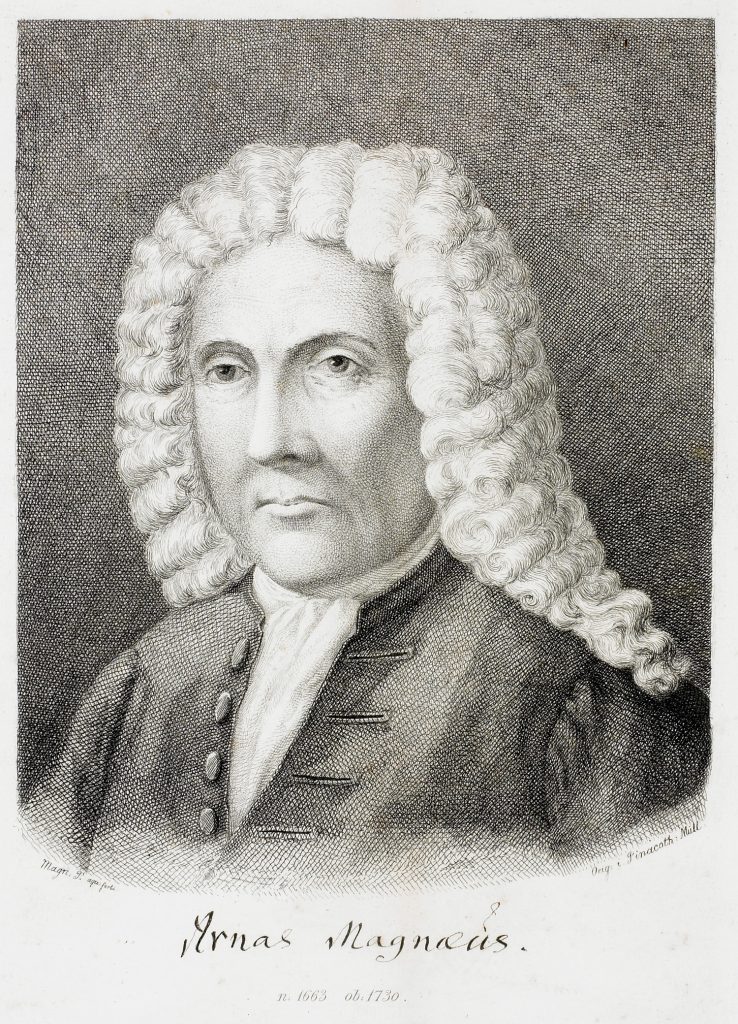
Portrait of Árni Magnússon
EARLY 20TH CENTURY AND WWII
In the early 1900s, Iceland was still largely under Danish rule, though it had gained a significant degree of autonomy with the Act of Union in 1918. During this period, the nation was marked by economic struggles, largely driven by fishing and agriculture. The fishing industry, which would later become Iceland’s backbone, was gradually expanding, but the country remained relatively poor and underdeveloped. Meanwhile, Iceland began to foster a burgeoning national identity, emphasizing its unique language, culture, and history.
Throughout the 1920s and 1930s, Iceland’s political landscape grew increasingly vibrant with the rise of nationalist movements and calls for greater independence. The country’s economy experienced some growth, thanks partly to advancements in fishing technology and the expansion of its maritime industries. However, the global depression of the 1930s hit Iceland hard, causing unemployment and economic hardship. Despite these difficulties, Iceland’s government, led by the Icelandic Independence Party and other nationalist groups, pushed for full sovereignty.
The outbreak of World War II dramatically impacted Iceland, especially after the German invasion of Denmark in 1940. Recognizing strategic importance, Britain occupied Iceland in May 1940 to prevent Nazi Germany from establishing a foothold there. Soon after, the United States took over the defense of the island in 1941, following the Lend-Lease agreement with Britain. This period marked a significant transformation, with American military bases and personnel arriving in large numbers, bringing modern technology, infrastructure, and a boost to the local economy.
During this time, Iceland’s neutrality was effectively breached, as the presence of Allied forces made the country a strategic military outpost in the North Atlantic. The war also led to increased political unity among Icelanders, who saw the importance of defending their sovereignty, even as external powers exerted influence. The war’s end in 1945 marked a turning point, setting the stage for Iceland’s full independence, which was achieved in 1944, when the republic was proclaimed, officially ending the union with Denmark.
Thus, from the early 20th century to the end of WWII, Iceland experienced profound transformation—shifting from a Danish-ruled, economically struggling society into an independent nation with a strong strategic and economic position, shaped by global conflicts and regional ambitions.
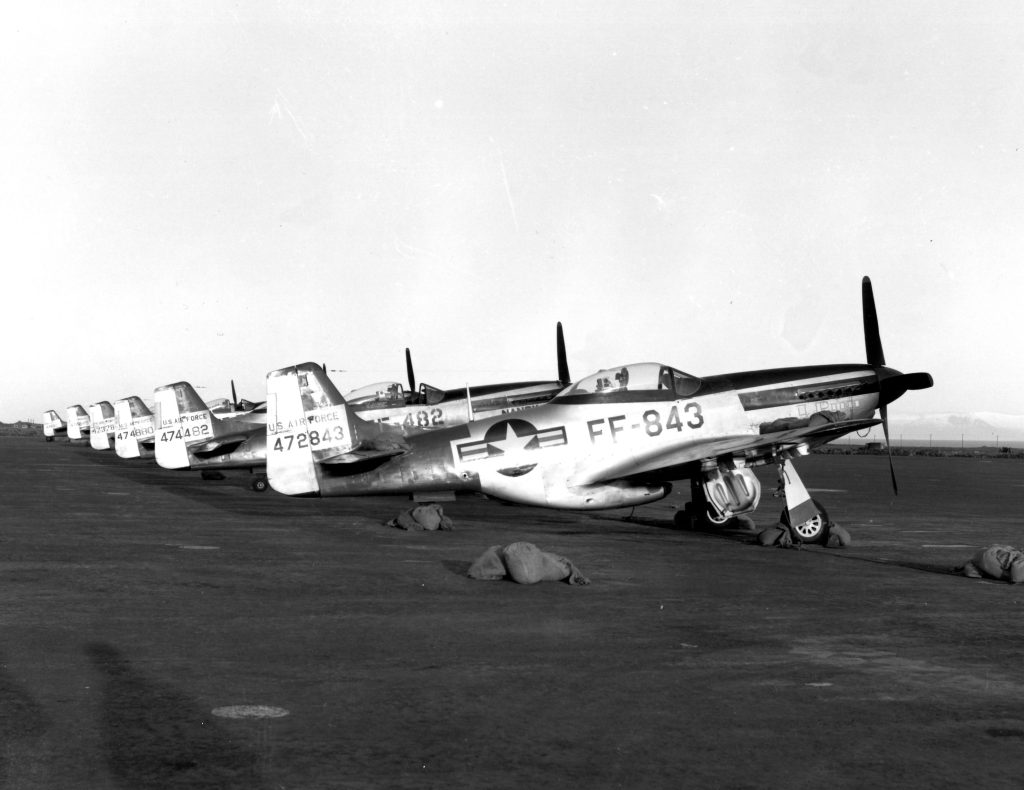
Image of North American F-51D-25-NA Mustangs in Keflavík in 1952
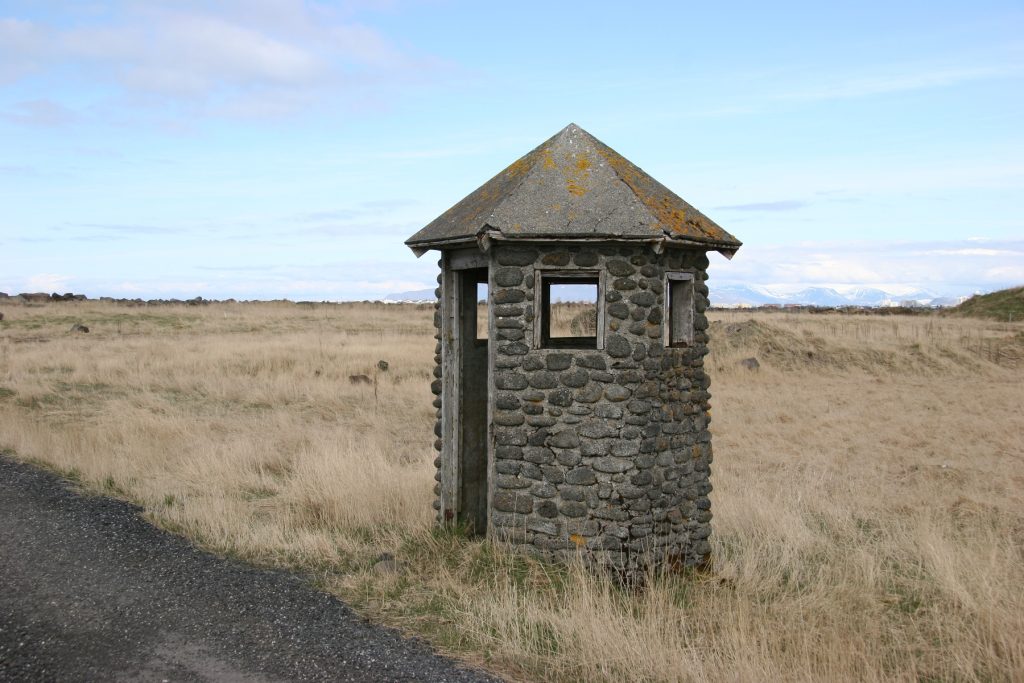
Image of WWII Watchtower at Álftanes – Courtesy of Ásgeir Helgason
Following World War II, Iceland underwent rapid modernization, especially in terms of infrastructure and strategic importance. One of the most notable developments was the establishment of Keflavík Airport, which transformed Iceland into a significant hub for transatlantic flights and military operations. The airport’s origins trace back to the late 1940s, when the United States recognized Iceland’s strategic location in the North Atlantic, crucial for defending against potential Soviet threats during the Cold War.
Initially, the U.S. military constructed Keflavík as a military base, but it soon evolved into a full-fledged international airport. The base’s expansion was driven by geopolitical necessity, but it also had profound effects on Iceland’s economy and society. The airport facilitated the development of modern air travel, making Iceland more accessible and connecting it directly to North America and Europe. This connectivity fostered tourism, trade, and cultural exchange, which previously had been limited.
Simultaneously, the post-war period saw a significant overhaul of Iceland’s road network. Before this era, roads were mostly unpaved, narrow, and often impassable during winter months. In the 1950s and 1960s, the government prioritized building modern roads, including bridges and tunnels, to improve connectivity across the island. The construction of the Ring Road (Route 1), completed in the 1970s, was a milestone, encircling the entire country and linking remote communities, fostering economic growth, and enabling easier movement of goods and people.
This period also marked the start of infrastructural investments in telecommunication, power generation, and urban development. Reykjavik, Iceland’s capital, expanded rapidly, with new neighborhoods, modern housing, and public services emerging to accommodate the growing population. The increase in tourism, facilitated by Keflavík Airport and improved roads, opened new economic opportunities, making Iceland more integrated with the global economy.
This newfound exposure brought North American and British cultures directly into Icelandic life. American movies, music, and consumer goods flooded into the country, shaping popular culture and youth identities. Simultaneously, British influences arrived through media, literature, and trade, fostering a broader cultural exchange. This influx of outside influences sparked debates about national identity, tradition, and modernization—challenging Icelanders to balance their cultural heritage with new global trends.
Furthermore, this period saw Iceland establishing itself more visibly on the international map. Its strategic location made it a vital player during the Cold War, hosting NATO bases and participating in global alliances. Yet, this visibility was not solely military—tourism blossomed as travelers from North America and Europe discovered Iceland’s unique landscapes, folklore, and natural wonders. The nation’s natural beauty, combined with its emerging modern infrastructure, turned Iceland into a sought-after destination.
After WWII, Iceland’s infrastructure boom—highlighted by the construction of Keflavík Airport and the development of modern roads—not only modernized the country but also positioned it as a key strategic and economic player in the North Atlantic region. These advances laid the groundwork for Iceland’s contemporary development, turning it into a nation characterized by connectivity, resilience, and strategic importance.
ICELAND TODAY
Today, Iceland stands as a remarkable example of resilience, innovation, and cultural preservation. Since declaring independence in 1944, when Sveinn Björnsson became the first president of the Republic of Iceland, the country has evolved into a modern, vibrant nation that balances its rich heritage with cutting-edge advancements. By 2025, Iceland has firmly established itself as a global leader in sustainability, technology, and social progress, all while maintaining its unique identity rooted in tradition and natural beauty.
Economically, Iceland has diversified far beyond its historical reliance on fishing. While fishing remains vital, the country now boasts a robust tourism industry, driven by its stunning landscapes—glaciers, volcanoes, geysers, and waterfalls—that attract millions annually. The tourism sector is carefully managed to preserve the environment, emphasizing eco-tourism and sustainable practices. Additionally, Iceland has become a hub for renewable energy, harnessing geothermal and hydroelectric power to meet most of its energy needs. This transition has made Iceland one of the world’s greenest nations, with a commitment to reducing carbon emissions and leading global climate initiatives.
Technologically, Iceland is at the forefront of innovation. The country has invested heavily in digital infrastructure, making it one of the most connected nations on Earth. Blockchain technology, artificial intelligence, and clean energy solutions are integrated into daily life, fostering entrepreneurship and attracting international tech companies. The Icelandic government actively promotes research and development, particularly in environmental sciences, biotech, and sustainable fisheries. Education remains highly valued, with universities and research institutions collaborating globally to address pressing issues like climate change and resource management.
Society in 2025 is characterized by inclusivity and progressive values. Iceland continues to be a pioneer in gender equality, LGBTQ+ rights, and social justice. The country boasts one of the highest gender parity rates in the world, with women holding significant leadership roles in politics, business, and academia. The population, around 370,000 residents, benefits from a high standard of living, universal healthcare, and free education. Despite its small size, Iceland actively participates in international diplomacy, environmental activism, and humanitarian efforts.
Culturally, Iceland remains deeply proud of its heritage—its sagas, folklore, and artistic traditions thrive alongside contemporary music, literature, and film. Reykjavik, the capital, has become a vibrant cultural hub, hosting festivals, concerts, and art exhibitions that draw visitors from all over the world. The nation’s commitment to preserving its language and traditions coexists harmoniously with its embrace of modern global influences.
In terms of geopolitics, Iceland’s strategic importance endures, especially as a leader in Arctic policy and climate research. Its geopolitical stance emphasizes sovereignty, environmental stewardship, and peaceful international cooperation. As a member of NATO and other international bodies, Iceland balances defense with diplomacy, advocating for sustainable development and regional stability.
Iceland is now a nation that exemplifies how a small country can punch above its weight on the global stage. It combines technological innovation, environmental stewardship, and social progress while honoring its historical roots. With its breathtaking landscapes, progressive society, and forward-thinking policies, Iceland continues to inspire the world—an island nation that has truly transformed into a modern beacon of resilience and ingenuity.
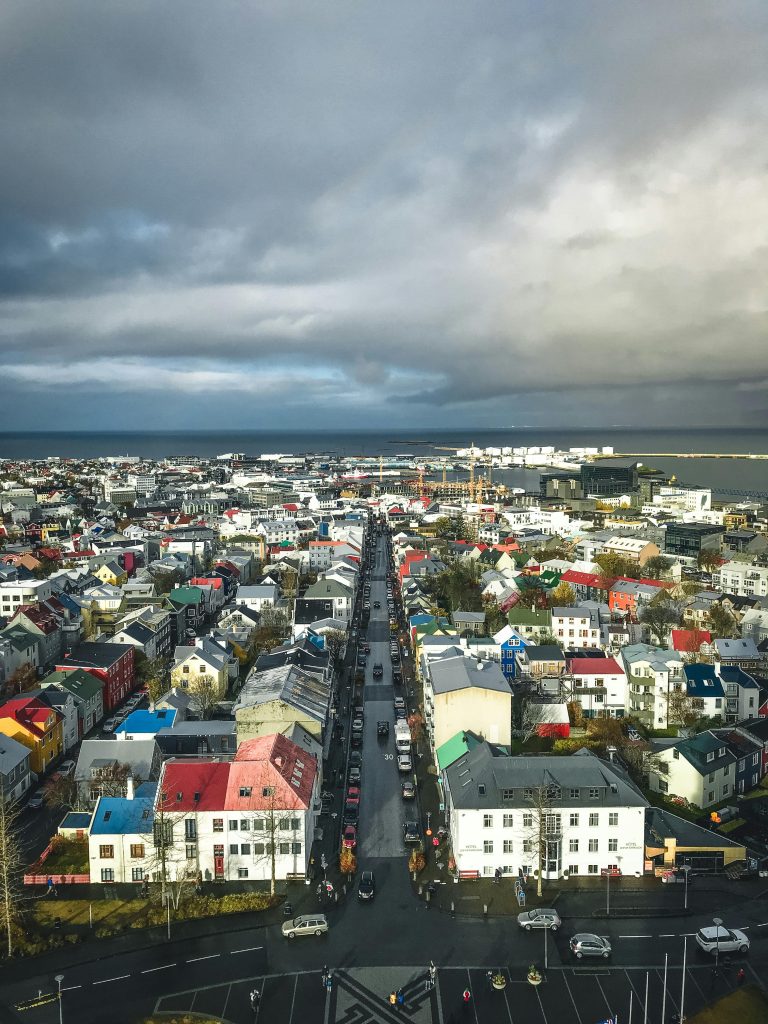
Image of Reykjavík from the top of Hallgrímskirkja – Courtesy of Jonathan Schmer
WANT TO LEARN MORE ABOUT ICELAND?
Want to discover more about Iceland? Visit our store or place an order with us! We’d love to help you explore our beautiful homeland and guide you toward books and resources that capture the essence of this incredible land. Let’s share the magic of Iceland together!